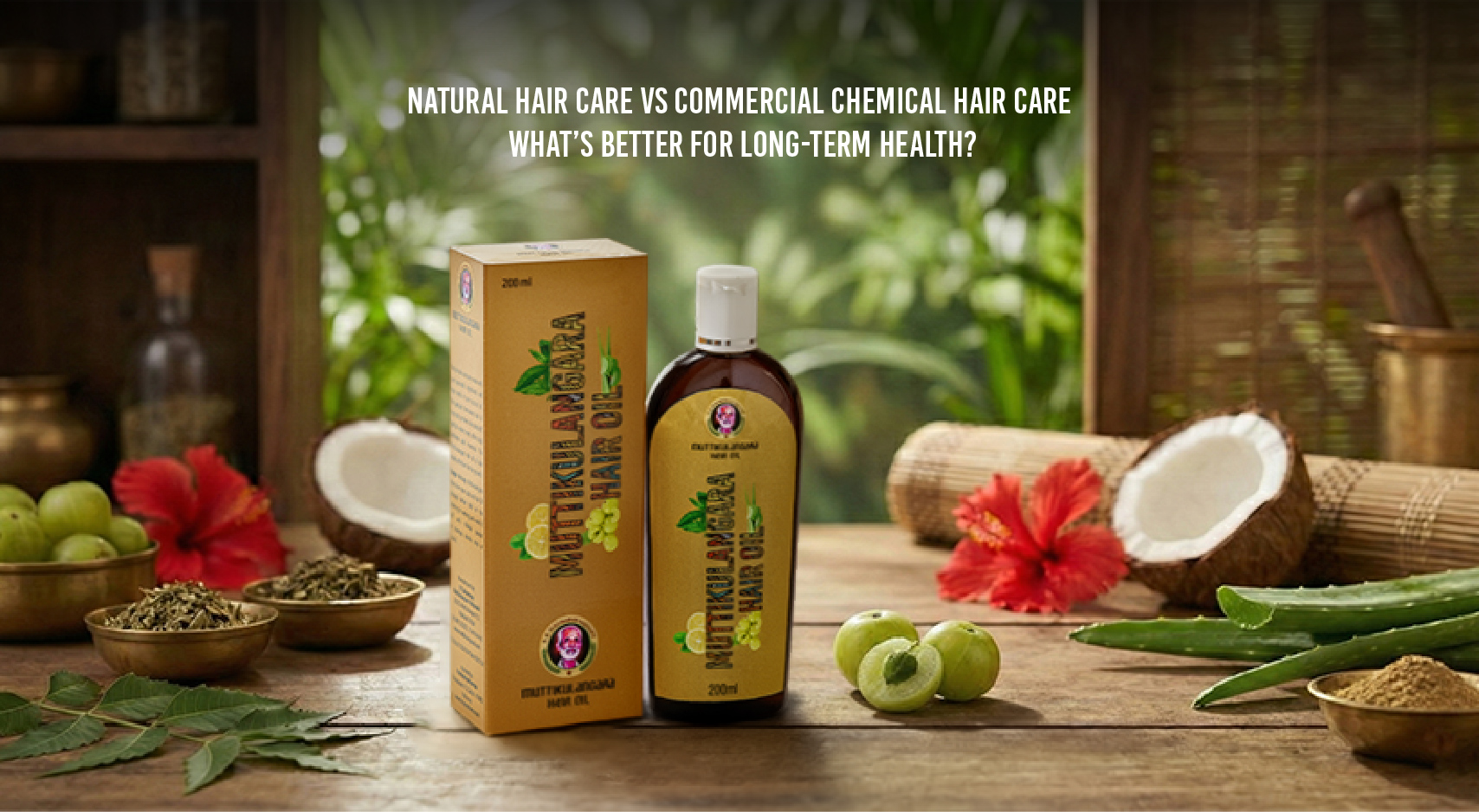
Natural/herbal hair care vs commercial chemical hair care: What’s better for long-term health?
Hair care today is a wide spectrum of endless choices that often confuses people. From commercial shampoos and serums that offer quick solutions to any problem to traditional Ayurvedic hair oil and herbal supplies that offer proven natural solutions, it is just a matter of choice. While both approaches aim to improve hair appearance, the real question is: which hair care method supports long-term hair and scalp health?
Understanding the difference between natural/herbal hair care and commercial chemical hair care can help you choose the right path that strengthens hair from the roots, protects the scalp, and prevents recurring issues like dandruff and hair fall.
Understanding natural/herbal hair care
Natural hair care focuses on nourishing the hair follicles from the root to the tip, using time-tested herbs such as bhringraj, amla, fenugreek, coconut, sesame, and neem. This treatment method, like any other Ayurvedic one, emphasises long-term hair health, scalp nourishment, and better hair growth. Rather than promising overnight fixes and makeovers, Ayurvedic hair oil and other hair care products offer holistic solutions that rely on consistency, patience, and overall wellness.
What is commercial chemical hair care?
Commercial hair care products work just the opposite of what Ayurvedic natural herbal products do. They rely on synthetic ingredients like sulphates, parabens, silicones, artificial fragrances, and preservatives to give that instant shine andoffer quick fixes. While this may seem convenient for the time being, these chemicals fail to support internal hair health, which will lead to hair damage in the long run.
How their impacts differ
See how both natural and chemical hair care methods work on your hair and scalp.
Scalp health
Natural/herbal hair care
Herbal formulations gently cleanse and nourish the scalp without stripping it of its natural oils. Ingredients like neem act as a natural dandruff solution, while hair care oil soothes irritation and dryness. An itchy scalp oil made with Ayurvedic herbs helps maintain scalp balance over time.
Chemical hair care
The sulphates in the shampoos and anti-dandruff solutions can disrupt the scalp’s natural barrier, causing extreme dryness and brittleness of the hair. Along with this, the synthetic fragrances and preservatives in these products can trigger itching, redness, and sensitivity, which often worsen dandruff when used for long periods.
Hair strength and damage control
Natural/herbal hair care
Regular use of natural hair oil strengthens hair shafts, reduces breakage, and improves elasticity. Herbal oils infused with neem, bhringraj, and amla seep into the roots of the hair follicles, making them stronger from within. This deep penetrating action helps reduce the damage caused by heat, pollution, styling, and stress.
Chemical hair care
While shampoos and conditioners offer instant smoothness and shine with the help of silicones, these results are temporary. This short-term coating of silicone in the hair strands will prevent moisture absorption, making strands weaker and drier. Over time, this will lead to dullness and increased hair fall.
Long-term hair health
Natural/herbal hair care
Herbal hair care is rooted in consistency and patience. Even though a natural hair care routine demands a little effort, like regular oiling, gentle cleansing, and the use of herbal masks, it delivers solid results. It helps reduce premature greying, supports natural hair growth, and maintains thickness and shine.
Chemical hair care
In contrast, commercial hair care products thrive on selling quick solutions that often lack long-term nourishment and understanding of the hair. These products alter the natural state of the hair to make it more manageable. But this solution does more damage and introduces bigger issues like hair thinning and increased dandruff when overexposed.
Side effects and safety
Herbal products
Responsibly sourced Ayurvedic hair care products generally have minimal side effects and are considered safe for long-term usage. They are free from harsh chemicals and minimise the risk of allergies and other skin issues.
Chemical products
Constant exposure to commercial hair products can lead to more damage than fixing your hair. These synthetic chemicals obstruct the natural oil production in the scalp, making it sensitive to many issues. They can trigger hair fall, dryness, and itchiness with extended use.
Herbal care routines vs quick-fix solutions
While commercial products offer quick solutions and easy maintenance benefits, herbal solutions aim for long-term nourishment that complements a healthier lifestyle.
Herbal hair care routine:
- Weekly oil massage with herbal hair oil
- Mild herbal shampoo
- Balanced diet, hydration. And stress management
- Consistency over time
Commercial hair care:
- Fast results for events or styling
- Short-term smoothness
- Limited long-term scalp benefits
Conclusion
Choosing between natural hair care and commercial chemical hair care is a matter of philosophy. While chemical products offer quick solutions and instant results, Ayurvedic hair care products focus on deep nourishment and long-term hair and scalp strength. If your goal is healthier and stronger hair that lasts, incorporating natural hair oil, herbal cleanser, and a balanced hair care routine is the better and safer choice.
FAQ
- Does a natural hair care routine suit every hair type?
Yes, you can get customised natural herbal solutions that work for oily, sensitive, or dry scalps.
- How does a herbal anti-dandruff oil work?
Herbal anti-dandruff solutions, such as hair oils, will be infused with herbs like neem or tea tree that are proven to help control dandruff naturally.
- How long does herbal hair care take to show results?
With consistent and proper usage, herbal routines start showing results within 4 to 6 weeks.